
Scientifically reviewed by
Dr. Ky H. Le, MD

The information presented in this article is for educational and research purposes only, intended for laboratory professionals, researchers and collaborators. This content does not constitute medical or clinical advice.
Tesamorelin is a structurally modified analog of human growth hormone-releasing hormone (GHRH) engineered for improved stability and research applications. The peptide’s defining feature is N-terminal hexenoyl modification, which increases resistance to enzymatic degradation compared to native GHRH while maintaining high-affinity GHRH receptor binding.
This 44-amino acid synthetic peptide provides researchers with a tool for investigating growth hormone (GH) and insulin-like growth factor-1 (IGF-1) axis biology. By stimulating endogenous pulsatile GH secretion rather than providing exogenous hormone, tesamorelin enables study of physiological regulatory mechanisms distinct from continuous GH replacement protocols.
Key Highlights
- Tesamorelin features N-terminal hexenoyl modification that increases enzymatic stability compared to native GHRH
- Activates GHRH receptors through Gsα-cAMP-PKA signaling pathway to trigger pulsatile growth hormone secretion
- Upregulates oxidative phosphorylation genes while downregulating inflammatory and fibrogenic pathways in hepatic tissue
- Provides research tool for investigating GH/IGF-1 axis biology, mitochondrial function, and metabolic regulation
Tesamorelin Structure
Tesamorelin’s molecular design balances structural fidelity to native GHRH with targeted modifications for improved research applications.
Hexenoyl Modification and Stability
The peptide consists of the full-length GHRH(1-44) sequence conjugated with a trans-3-hexenoic acid moiety at the N-terminal tyrosine residue. This six-carbon fatty acid chain with a double bond at position three provides protection from dipeptidyl peptidase and neutral endopeptidase cleavage that rapidly degrades native GHRH.[1]
The hexenoyl group serves multiple functions beyond proteolytic resistance. The hydrophobic acyl chain influences membrane interactions and may affect receptor binding kinetics while maintaining conformational requirements for GHRH receptor activation.
Comparative analysis with other GHRH analogs reveals distinct structural strategies:
- Sermorelin: Truncated GHRH(1-29) sequence with shorter half-life
- CJC-1295: GHRH(1-29) with Drug Affinity Complex technology for extended circulation
- Tesamorelin: Full-length sequence with balanced stability and pharmacokinetics
LC-MS/MS characterization has identified 19 major metabolites following in vitro enzymatic processing, indicating that while the hexenoyl modification provides substantial N-terminal protection, the peptide undergoes physiological catabolism through alternative cleavage sites.[2]
GHRH Receptor Binding
The GHRH receptor belongs to the class B family of G protein-coupled receptors, characterized by a large extracellular N-terminal domain serving as the primary ligand-binding interface.
Tesamorelin’s interaction with this receptor mirrors native GHRH binding patterns. The N-terminal domain (residues 1-29) provides the core pharmacophore for receptor activation, while C-terminal residues (30-44) contribute to binding affinity and receptor selectivity.[3]
GHRH receptor expression extends beyond the anterior pituitary. Extrapituitary localization has been documented in cardiac tissue, gastrointestinal tract, kidney, reproductive organs, and hepatocytes, suggesting potential direct tissue effects independent of pituitary GH secretion.[4]
Related Product: Buy Tesamorelin for laboratory research use.
GPCR Signaling Mechanisms
Tesamorelin initiates cellular responses through well-characterized GPCR (G protein-coupled receptor) signaling cascades beginning at the plasma membrane of pituitary somatotroph cells.
Gsα-Adenylyl Cyclase Pathway
Upon ligand binding, the GHRH receptor undergoes conformational changes that promote coupling to heterotrimeric Gsα proteins. The activated Gsα subunit dissociates and directly stimulates membrane-bound adenylyl cyclase enzymes, catalyzing conversion of ATP to cyclic adenosine 3′,5′-monophosphate (cAMP).[5]
Accumulation of intracellular cAMP triggers activation of cAMP-dependent protein kinase A (PKA). This serine/threonine kinase exists as an inactive tetrameric complex until cAMP binding to regulatory subunits releases active catalytic subunits that phosphorylate downstream targets.[6]
Within somatotrophs, PKA-mediated phosphorylation targets multiple substrates converging on growth hormone gene transcription and secretory vesicle mobilization.
Transcriptional Regulation
The human GH promoter contains two non-classical cAMP-response elements at positions -187/-183 and -99/-95 that serve as binding sites for CREB and related transcription factors.[7]
PKA phosphorylates CREB at serine 133, increasing its interaction with the coactivator CREB-binding protein (CBP) and promoting transcriptional activation of the GH gene. This phosphorylation-dependent mechanism links extracellular GHRH signaling to nuclear gene expression changes.
Pulsatile GH Secretion Dynamics
A defining characteristic of tesamorelin is preservation and enhancement of endogenous pulsatile GH secretion patterns rather than inducing continuous hormone elevation.[8]
The hypothalamic-pituitary axis maintains GH release in discrete pulses occurring approximately every 3-4 hours. This pulsatile pattern proves physiologically necessary, as continuous GH exposure induces receptor downregulation and attenuated metabolic responses.
Tesamorelin administration stimulates GH pulse amplitude during secretory bursts without fundamentally altering ultradian rhythm or basal levels between pulses. Enhancement of peak GH during natural secretory events, rather than elevation of nadir levels, preserves the oscillatory pattern critical for maintaining GH receptor sensitivity.[9]
IGF-1 produced in response to GH exerts negative feedback by enhancing hypothalamic somatostatin release and directly inhibiting pituitary GH gene expression. This homeostatic mechanism prevents supraphysiological GH elevations even with repeated tesamorelin administration.
Hepatic Transcriptomic Effects
Transcriptomic profiling of hepatic tissue from controlled studies reveals coordinate regulation of multiple gene expression pathways following tesamorelin-stimulated GH axis activation.
Oxidative Phosphorylation Upregulation
RNA sequencing with gene set enrichment analysis identified upregulation of oxidative phosphorylation gene sets as the most prominent transcriptional change.[10] These pathways encompass genes encoding:
- Mitochondrial electron transport chain complexes (I-V)
- Mitochondrial ribosomal proteins
- Nuclear-encoded mitochondrial genes
This transcriptional signature suggests increased mitochondrial biogenesis and respiratory capacity. The upregulation correlates with improved hepatic energy metabolism and may mechanistically explain reductions in hepatic steatosis through enhanced fat oxidation capacity.
Functional validation using phosphorus-31 magnetic resonance spectroscopy demonstrated improved phosphocreatine recovery kinetics following tesamorelin administration, confirming that transcriptional changes translate to measurable improvements in mitochondrial oxidative capacity.[11]
Inflammatory and Fibrogenic Downregulation
Tesamorelin induced downregulation of 13 gene sets related to inflammation, tissue repair, and proliferation:
Inflammatory Signaling Pathways:
- IL-6/JAK/STAT3 signaling
- TNF-α/NF-κB pathway
- Interferon response genes
Fibrogenic and Proliferative Pathways:
- TGF-β signaling cascade
- Epithelial-mesenchymal transition
- Cell cycle regulation (G2M checkpoint, E2F targets)
The magnitude of these transcriptomic changes correlated significantly with improvements in gene-level fibrosis scores derived from 18 fibrosis-associated genes, providing evidence that transcriptional alterations translate to meaningful changes in liver pathophysiology.[10]
Proteomic Validation
Targeted proteomic analysis examined plasma levels of proteins corresponding to leading edge genes within differentially modulated pathways, validating transcriptomic findings at the protein level.[12]
Three proteins demonstrated significant reductions with tesamorelin:
- VEGFA (Vascular Endothelial Growth Factor A): Tesamorelin reduced plasma VEGFA by approximately 20%, with reduction magnitude correlating with decreased NAFLD Activity Score. VEGFA functions as a pro-angiogenic factor, and excessive angiogenesis accompanies progression from simple steatosis to steatohepatitis.
- TGFB1 (Transforming Growth Factor Beta 1): Circulating TGFB1 declined approximately 35% with treatment. This master regulator of fibrogenic processes stimulates hepatic stellate cell activation and extracellular matrix deposition. TGFB1 reduction correlated strongly with decreased gene-level fibrosis scores.
- CSF1 (Colony Stimulating Factor 1): Plasma CSF1 decreased 17%, with reductions correlating with both decreased inflammation and fibrosis scores. Baseline CSF1 levels correlated with disease severity, establishing it as a biomarker. The inverse correlation between declining CSF1 and rising IGF-1 suggests IGF-1 may suppress CSF1 expression or secretion.
Metabolic Pathways and Systemic Effects
GH axis activation through tesamorelin triggers multiple metabolic pathway modulations across tissues.
Lipid Metabolism
GH exerts potent lipolytic effects on adipose tissue through JAK2-STAT5 signaling, leading to phosphorylation and activation of hormone-sensitive lipase (HSL), the rate-limiting enzyme for triglyceride hydrolysis.[13]
Controlled studies demonstrate 15-20% reductions in visceral adipose tissue over 6-12 months with tesamorelin administration. Visceral adipocytes exhibit distinct metabolic properties compared to subcutaneous fat, secreting higher levels of pro-inflammatory cytokines and metabolically adverse adipokines.[14]
In hepatocytes, GH and IGF-1 modulate lipid metabolism through transcriptional regulation of genes controlling lipogenesis and fatty acid oxidation. Downregulation of sterol regulatory element-binding protein-1c (SREBP-1c) reduces de novo lipogenesis, while upregulation of fatty acid β-oxidation enzymes increases hepatic fat oxidation capacity.[15]
IGF-1 Production and Metabolic Actions
The liver serves as the primary site of IGF-1 synthesis in response to GH stimulation. GH binding to hepatocyte GH receptors activates the JAK2-STAT5b pathway, inducing IGF-1 gene transcription.[16]
IGF-1 exerts metabolic actions distinct from yet complementary to GH:
- Activates insulin receptor substrate (IRS)-1/PI3K/Akt pathway
- Stimulates glucose transporter-4 (GLUT4) translocation
- Suppresses hepatic glucose production
- Inhibits gluconeogenic enzyme expression (PEPCK, G6Pase)
IGF-1 signaling through PI3K/Akt leads to phosphorylation and cytoplasmic sequestration of the FOXO1 transcription factor, preventing nuclear localization and transcriptional activation of gluconeogenic genes.[17]
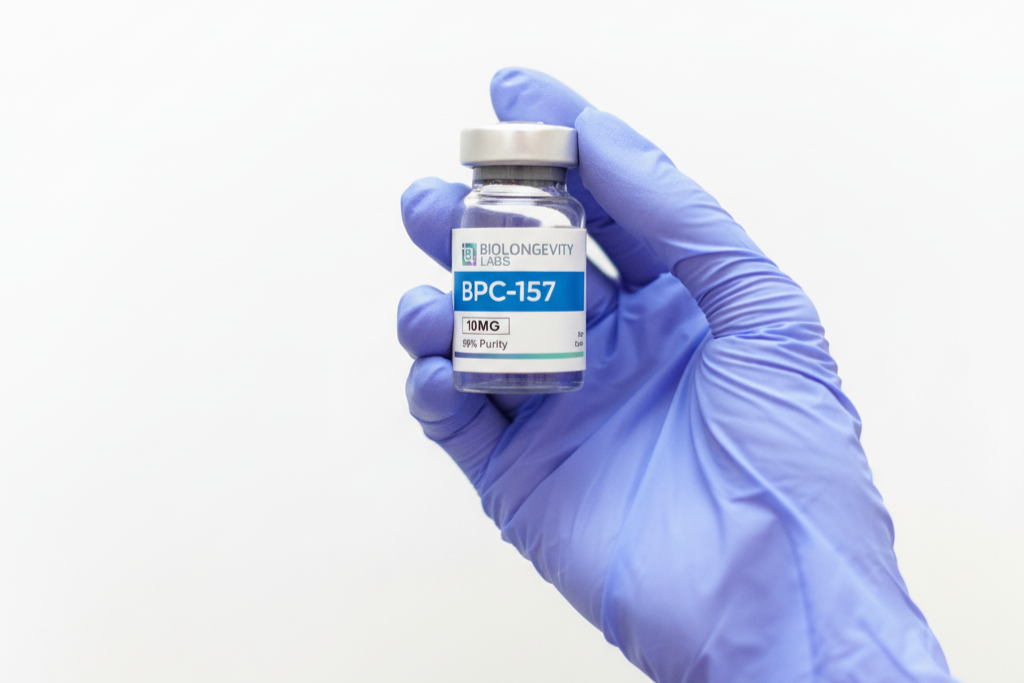
Third-Party Tested, USA-Made, 99% Purity
Lyophilized peptides for laboratory applications. 99% purity, 100% USA-Made.
Research Applications and Experimental Models
Tesamorelin provides researchers with distinct capabilities for investigating multiple aspects of metabolic biology and endocrine regulation.
Metabolic Research Models
The peptide enables controlled investigation of GH/IGF-1 axis physiology under experimental conditions:
- Adipose Tissue Biology: Researchers can examine mechanisms of preferential visceral fat mobilization, adipokine secretion patterns, and adipose tissue inflammation in response to enhanced GH secretion.[18]
- Hepatic Metabolism: Substantial transcriptomic and proteomic datasets establish gene expression signatures associated with improved hepatic function, enabling identification of potential therapeutic targets and biomarkers.
- Mitochondrial Function: Enhancement of oxidative phosphorylation gene expression and functional mitochondrial capacity provides a model for investigating how endocrine signals regulate mitochondrial biogenesis and respiratory function.
- Inflammation and Immunity: Reductions in inflammatory mediators including CSF1, VEGFA, and pro-inflammatory cytokines establish tesamorelin as a tool for examining neuroendocrine-immune interactions.
Comparative Peptide Studies
The existence of multiple GHRH analogs with distinct structural modifications enables comparative research examining structure-activity relationships:
- Sermorelin: Truncated sequence; shorter half-life
- CJC-1295: Extended half-life via DAC technology
- Tesamorelin: Balanced stability and pharmacokinetics
Researchers can leverage these variants to dissect contributions of peptide length to receptor binding affinity, N-terminal modifications to enzymatic stability, and C-terminal residues to tissue-specific effects.
Multi-Omics Integration Strategies
The integration of transcriptomic and proteomic approaches exemplifies modern systems biology strategies enabling:
- Pathway discovery through unbiased gene expression profiling
- Validation via targeted proteomic analysis
- Mechanistic linkage between molecular changes and outcomes
- Biomarker development from circulating proteins
Technical Considerations for Researchers
Experimental design with tesamorelin requires attention to several variables that influence response magnitude and interpretation.
- Baseline Metabolic State: GH/IGF-1 axis effects vary substantially depending on baseline metabolic status. Individuals with reduced GH secretion, insulin resistance, or hepatic steatosis show more pronounced responses than metabolically healthy controls.
- Sex and Hormonal Status: Estrogen and testosterone modulate GH secretory dynamics and tissue responsiveness. Studies should stratify by sex or include sex as a covariate in analyses.
- Temporal Dynamics: Transcriptional effects evolve over weeks to months. Mechanistic studies require serial sampling at appropriate intervals to capture dynamic changes.
- Analytical Requirements: Detection and quantification of tesamorelin requires sophisticated LC-MS/MS approaches capable of distinguishing structurally similar peptides and metabolites in complex biological matrices.
Research Applications Summary
| Research Area | Application | Methodology |
|---|---|---|
| GH/IGF-1 Axis Biology | Pulsatile secretion dynamics, feedback regulation | Serial hormone sampling, deconvolution analysis |
| Hepatic Transcriptomics | Gene expression pathway identification | RNA-seq, pathway enrichment analysis |
| Mitochondrial Function | Oxidative phosphorylation capacity | ³¹P-MRS, respirometry |
| Metabolic Regulation | Lipid metabolism, glucose homeostasis | Stable isotope tracers, indirect calorimetry |
| Inflammation Studies | Cytokine and growth factor regulation | Targeted proteomics, immunoassays |
Quick Review
Tesamorelin exemplifies rational peptide design combining structural modification for improved stability with preservation of native GHRH signaling properties. The hexenoyl-modified N-terminus confers enzymatic resistance while maintaining high-affinity receptor binding, enabling physiological augmentation of pulsatile GH secretion.
For researchers investigating GH/IGF-1 axis biology, hepatic metabolism, mitochondrial function, or neuroendocrine-immune interactions, tesamorelin provides a sophisticated experimental tool. The substantial mechanistic datasets generated through multi-omics approaches establish foundational knowledge for hypothesis-driven research into metabolic regulation.
BioLongevity Labs supplies research-grade tesamorelin manufactured in USA GMP facilities with third-party testing verification and 99+% purity guarantees. All products are strictly for research use only and not for human consumption.
Scientific Reviewer
This research article has been scientifically reviewed and fact-checked by Dr. Ky H. Le, MD. Dr. Le earned his medical degree from St. George’s University School of Medicine and completed his residency training at Memorial Hermann Southwest Hospital. Board-certified in family medicine with experience in hospital medicine, he brings over two decades of clinical experience to reviewing research content and ensuring scientific accuracy.
About BioLongevity Labs
BioLongevity Labs supplies USA-made research peptides for in vitro laboratory applications. All compounds undergo independent third-party testing to verify purity and composition, with full certificates of analysis available for researchers requiring documentation. Browse our complete peptide catalog to find research-grade peptides for your laboratory needs.
References
- Memdouh S, Gavrilović I, Ng K, Cowan D, Abbate V. Advances in the detection of growth hormone releasing hormone synthetic analogs. Wiley; 2021. https://doi.org/10.1002/dta.3183
- Knoop A, Thomas A, Fichant E, Delahaut P, Schänzer W, Thevis M. Qualitative identification of growth hormone-releasing hormones in human plasma by means of immunoaffinity purification and LC-HRMS/MS. Springer Science and Business Media LLC; 2016. https://doi.org/10.1007/s00216-016-9377-3
- Cunha SR, Mayo KE. Ghrelin and growth hormone (GH) secretagogues potentiate GH-releasing hormone (GHRH)-induced cyclic adenosine 3′,5′-monophosphate production in cells expressing transfected GHRH and GH secretagogue receptors. The Endocrine Society; 2002. https://doi.org/10.1210/en.2002-220670
- Dubovy SR, Fernandez MP, Echegaray JJ, Block NL, Unoki N, Perez R, et al. Expression of hypothalamic neurohormones and their receptors in the human eye. Impact Journals, LLC; 2017. https://doi.org/10.18632/oncotarget.18358
- Limbird LE. Activation and attenuation of adenylate cyclase. The role of GTP-binding proteins as macromolecular messengers in receptor–cyclase coupling. Portland Press Ltd.; 1981. https://doi.org/10.1042/bj1950001
- Grosse R, Schmid A, Schöneberg T, Herrlich A, Muhn P, Schultz G, et al. Gonadotropin-releasing hormone receptor initiates multiple signaling pathways by exclusively coupling to Gq/11 proteins. Elsevier BV; 2000. https://doi.org/10.1074/jbc.275.13.9193
- Cohen LE, Hashimoto Y, Zanger K, Wondisford F, Radovick S. CREB-independent regulation by CBP is a novel mechanism of human growth hormone gene expression. American Society for Clinical Investigation; 1999. https://doi.org/10.1172/jci7308
- Stanley TL, Chen CY, Branch KL, Makimura H, Grinspoon SK. Effects of a growth hormone-releasing hormone analog on endogenous GH pulsatility and insulin sensitivity in healthy men. The Endocrine Society; 2011. https://doi.org/10.1210/jc.2010-1587
- Makimura H, Stanley TL, Chen CY, Branch KL, Grinspoon SK. Relationship of adiponectin to endogenous GH pulse secretion parameters in response to stimulation with a growth hormone releasing factor. Elsevier BV; 2011. https://doi.org/10.1016/j.ghir.2011.03.009
- Fourman LT, Billingsley JM, Agyapong G, Ho Sui SJ, Feldpausch MN, Purdy J, et al. Effects of tesamorelin on hepatic transcriptomic signatures in HIV-associated NAFLD. American Society for Clinical Investigation; 2020. https://doi.org/10.1172/jci.insight.140134
- Makimura H, Murphy CA, Feldpausch MN, Grinspoon SK. The effects of tesamorelin on phosphocreatine recovery in obese subjects with reduced GH. The Endocrine Society; 2014. https://doi.org/10.1210/jc.2013-3436
- Fourman LT, Stanley TL, Billingsley JM, Sui SJH, Feldpausch MN, Boutin A, et al. Delineating tesamorelin response pathways in HIV-associated NAFLD using a targeted proteomic and transcriptomic approach. Springer Science and Business Media LLC; 2021. https://doi.org/10.1038/s41598-021-89966-y
- Huang Z, Lu X, Huang L, Zhang C, Veldhuis JD, Cowley MA, et al. Stimulation of endogenous pulsatile growth hormone secretion by activation of growth hormone secretagogue receptor reduces the fat accumulation and improves the insulin sensitivity in obese mice. Wiley; 2020. https://doi.org/10.1096/fj.202001924rr
- Falutz J, Mamputu JC, Potvin D, Moyle G, Soulban G, Loughrey H, et al. Effects of tesamorelin (TH9507), a growth hormone-releasing factor analog, in human immunodeficiency virus-infected patients with excess abdominal fat: a pooled analysis of two multicenter, double-blind placebo-controlled phase 3 trials with safety extension data. The Endocrine Society; 2010. https://doi.org/10.1210/jc.2010-0490
- Stanley TL, Feldpausch MN, Oh J, Branch KL, Lee H, Torriani M, et al. Effect of tesamorelin on visceral fat and liver fat in HIV-infected patients with abdominal fat accumulation. American Medical Association (AMA); 2014. https://doi.org/10.1001/jama.2014.8334
- Abu El-Makarem MA, Kamel MF, Mohamed AA, Ali HA, Mohamed MR, Mohamed AEDM, et al. Down-regulation of hepatic expression of GHR/STAT5/IGF-1 signaling pathway fosters development and aggressiveness of HCV-related hepatocellular carcinoma: crosstalk with Snail-1 and type 2 transforming growth factor-beta receptor. Public Library of Science (PLoS); 2022. https://doi.org/10.1371/journal.pone.0277266
- Park SH, Park J, Yoo JY, Kim HS, Lee M, Kim OK. Humulus japonicus enhances bone growth and microarchitecture in rats: potential involvement of IGF-1 signaling. SAGE Publications; 2025. https://doi.org/10.1089/jmf.2025.k.0002
- Stanley TL, Falutz J, Marsolais C, Morin J, Soulban G, Mamputu JC, et al. Reduction in visceral adiposity is associated with an improved metabolic profile in HIV-infected patients receiving tesamorelin. Oxford University Press (OUP); 2012. https://doi.org/10.1093/cid/cis251